
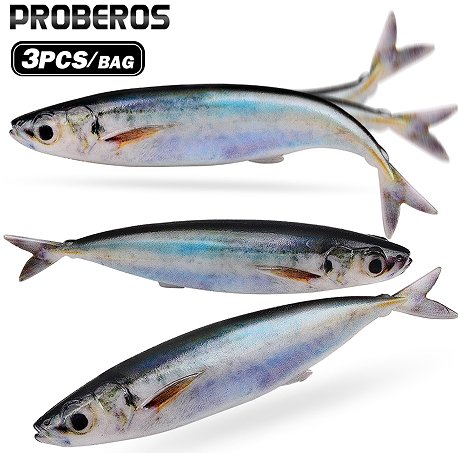
Every saltwater angler knows the sound: a school of sardines getting pushed to the surface, gulls diving, water boiling. And every angler has had the same frustration - casting a lure straight into the middle of it and getting nothing. The fish are not refusing your lure. They are refusing the wrong baitfish, at the wrong depth, moving at the wrong speed.
Why profile beats action in a frenzy
In a boil, predators are not hunting - they are filtering. They swim through the baitball with their mouths open and take what matches. A slim, silver-flanked sardine profile with a forked tail is the single most common shape in that ball, which is why a dedicated sardine soft bait outperforms a generic paddle tail when the sea is alive.
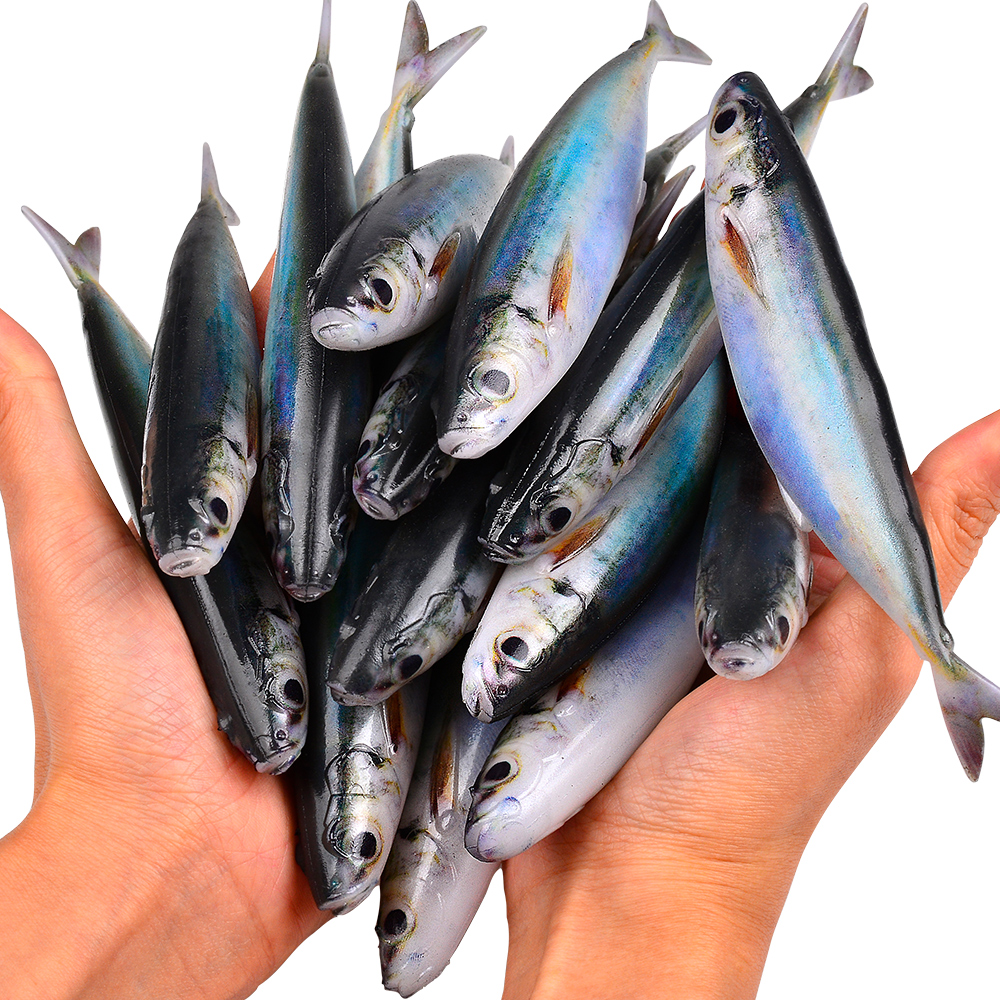
Read the bait before you cast
- What size is the bait? Match it. A 14.5 cm body is right for adult sardine; if the ball is made of tiny fry, scale down or expect refusals.
- How deep is it? Cast past the boil and count the bait down to the depth the baitfish are holding at - usually a metre or two below the surface activity.
- Which way is it moving? Cast ahead of the school and retrieve in the same direction. Dragging a lure backwards through a baitball looks wrong.
Retrieve: speed changes, not steady winding
A fleeing sardine does not swim in a straight line at constant speed. It bursts, glides, bursts again. Copy that:
- Two or three fast turns of the handle, then a one-second pause.
- An occasional sharp rod snap to make the bait dart sideways.
- Keep the rod tip up so the bait stays high in the water column where the boil is.
When the frenzy dies, do not leave. Drop the bait down and slow right down - the fish are still underneath, feeding on the pieces.
Rigging for saltwater
- Jig head: 10-20 g depending on depth and drift. The bait must sit level and sink nose-first.
- Leader: 30-40 lb fluorocarbon. Bluefish, barracuda and bonito all have teeth.
- Hooks: check the point after every fish - saltwater fish crush hooks flat faster than freshwater species do.
- Rinse everything including the soft baits themselves. Salt crystals destroy plastic and rust hooks overnight.
Species it works on
- European sea bass - the classic target, especially off rock marks and estuary mouths on a flooding tide.
- Tuna and bonito - small tuna key on sardines; cast into the boil and hold on.
- Mackerel - fast retrieve, they hit anything moving away.
- Barracuda - use wire, they cut fluorocarbon without slowing down.
Who should carry sardine soft baits
- Shore anglers working estuaries and rock marks in autumn when bass push bait into the shallows.
- Boat anglers chasing surface feeding - keep one rod rigged and ready, because boils last minutes.
- Travelling anglers who want one pack that covers Mediterranean, Atlantic and tropical species.
Specifications
| Model | Length | Weight | Per pack | Body |
|---|---|---|---|---|
| DW6137 Sardine | 14.5 cm / 5.7 in | 33.3 g | 3 pcs | Salt & scent impregnated soft plastic |
FAQ
Do I need to add scent? No - the body is already salt and scent impregnated. Re-apply only after a dozen fish.
Can I fish it from the shore? Yes. It casts well on a 10-20 g jig head and works on a steady retrieve over rock and sand.
How many fish per bait? Typically five to ten before a predator cuts the tail off. That is what the 3-pack is for.
Comments (0)
No comments yet. Landed a fish on this lure? Tell us where and how.