
It's late September, the water is finally cooling down, and every angler on the lake is throwing a crankbait at the banks. Meanwhile, the biggest bass in the lake have pulled up shallow and buried themselves in the thickest, ugliest cover they can find — wood laydowns, matted grass, dock pilings. They won't chase. They won't come to you. You have to go in after them, and there is one bait class built for exactly that job: the silicone skirt jig.
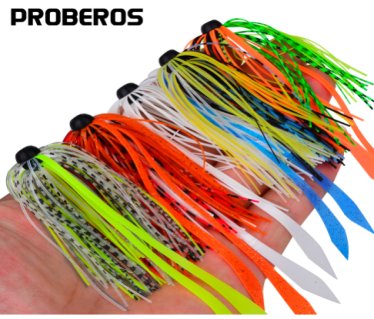
What a Skirt Jig Actually Is
A skirt jig is a weighted lead head molded around a hidden hook point, dressed in a bundle of fine silicone strands. When the bait falls, those strands flare out and pulse — they look exactly like the legs and claws of a crawfish kicking backward, or a bluegill finning off the bottom. The silicone does two jobs at once: it hides the hook on the fall so the bait comes through snags clean, and it creates movement that keeps triggering the fish even when the jig is sitting still.
The Sunlure PJ031 silicone skirt jig follows this classic recipe — a weighted head with breathing silicone legs that flare on every fall, salt and scent impregnated into the body. It ships as a 10-piece pack, which matters more than you'd think, because jigs are a consumable. You will lose some in the wood. A 10-pack lets you fish the technique aggressively instead of babying your last jig.
Where and When: Fall Cover Is the Ticket
From early autumn until the first hard freeze, bass feed heavily to fatten up for winter, and their #1 food source in shallow cover is crawfish. Crawfish live where the cover is, so the fish live there too.
- Wood cover: laydown trees, brush piles, dock pilings and riprap corners. Fish hold in the shadow lines and inside forked branches.
- Matted grass: hyacinth, millfoil and grass clumps form a canopy. Punching a jig through the mat and letting it pop out below is a deadly fall pattern.
- Rock banks and transitions: where chunk rock meets gravel or where a bank shifts from rock to wood, crawfish stage in numbers. A jig hopped along the transition catches fish all day.
- Dock shade: on pressured lakes, skip or pitch a jig into the darkest, tightest corners under docks.
Time of day matters less in fall than it does in summer. Overcast days with a ripple on the water can produce an all-day flipping bite; on bluebird days, focus on the densest cover available.
How to Fish It: Three Retrieves That Cover Everything
1. The pitch-and-fall (your bread and butter). Flip or pitch the jig to a target, let it fall on semi-slack line, and watch the line like a hawk. The vast majority of bites come on the initial fall — you'll see the line tick, jump, or start moving sideways. Reel down and set hard. Count to five before reeling in: a jig sitting motionless in cover, skirt pulsing with every water movement, is at its most dangerous. Patience is the retrieve.
2. The bottom hop. Drag the jig along the bottom, then snap your rod tip up a foot or two and let it fall back on slack line. The hop makes the skirt flare like a startled crawfish darting off the bottom; the fall is when they eat it. This is the pattern for rock banks and sparse grass.
3. The slow swim. In open pockets between cover, simply reel slowly enough that you feel the bottom ticking. The skirt breathes the whole way back. When a fish follows but won't commit, kill the reel for two seconds — that stall is when the rod loads up.
Gear note: you don't need heavy specialty tackle to start. A medium-heavy rod, 30–50 lb braid (or 15–20 lb fluorocarbon around clear water), and a reel with a decent drag will flip and pitch all day. Weight-wise, the 25g head on the PJ031 is a versatile middle ground — heavy enough to punch into wood and grass, light enough to hop without plowing.
Target Species
- Largemouth bass — the primary target, especially fish relating to shallow wood and grass in fall.
- Smallmouth and spotted bass — excellent on the bottom-hop retrieve around rock.
- Pike — a skirt jig dragged over weed edges gets crushed; add a short wire or heavy fluorocarbon leader.
- Snakehead — thick-cover specialists that barely distinguish a flipped jig from their regular prey.
Who This Technique Is For
If you're brand new to fishing, a skirt jig is honestly one of the easiest reaction baits to learn: cast it at visible cover, let it fall, feel for weight, set the hook. There's no cadence to learn like a glide bait and no treble-hook gymnastics like a crankbait. If you're an experienced angler stuck catching dinks on finesse gear, flipping a jig is how you get bit by the fish that never see a lure — and the 10-piece PJ031 pack means a learning curve full of lost baits won't break the bank.
Specifications
| Model | Sunlure PJ031 |
| Weight | 25 g per jig |
| Pack | 10 pcs |
| Skirt | Silicone strands, flare on the fall |
| Body | Salt & scent impregnated soft plastic |
| Best for | Largemouth bass, snakehead, pike |
| Techniques | Flipping, pitching, hopping, slow swimming |
FAQ
Do I need a trailer on the jig?
No — the silicone skirt alone swims and pulses fine, and that's how most anglers fish it in thick cover. Adding a craw- or chunk-style plastic trailer slows the fall and adds bulk in colder water; both approaches work.
How do I keep from getting snagged constantly?
You won't avoid it entirely — that's flipping. Cast past your target, keep the rod high on the fall, and when you do hang up, position the boat or walk to the opposite side before pulling; most jigs pop free. A 10-pack exists precisely because some wood keeps what it catches.
What line should I use?
30–50 lb braid for heavy cover and grass mats; 15–20 lb fluorocarbon around rock or in clearer water where braid visibility is a concern.
Is a 25g jig too heavy for shallow water?
Not in this style. The skirt opens and slows the fall dramatically, so a 25g head still falls at a natural pace — and you'll appreciate the weight when you need to punch through a grass mat or reach the back of a laydown.
Does it work in saltwater?
The body is salt-impregnated soft plastic and holds up to the odd inshore fish, but this jig is designed and optimized for freshwater bass, snakehead and pike fishing.
The Bottom Line
Fall is the one window where the biggest, meanest fish in your lake sit shallow and eat a slow-falling crawfish imitation with zero hesitation. A silicone skirt jig is the simplest, most forgiving tool for the job — and the Sunlure PJ031 Skirt Jig 10-pack gives you plenty of ammo to fish it the way it demands: right in the heart of the ugliest cover you can find.
Comments (0)
No comments yet. Landed a fish on this lure? Tell us where and how.