
Hybrid lures — an ABS head over-molded onto or bonded to a soft PVC body — fail in the field in one predictable way: the joint. Not the paint, not the action. The joint. The root cause is almost always residual injection stress, and controlling it is the difference between a lure that survives a pike season and one that cracks in the packet.
Where the stress comes from
When molten ABS is forced into a cold cavity around an insert (the soft body or connector), the outer layers freeze while the core is still packing. The frozen skin gets dragged; molecular chains lock in stretched. That stored energy waits for a trigger — cold weather, tooth impact, or simply time — and releases as a crack running exactly along the insert line.
Three knobs we tune on every new mold
- Melt & mold temperature balance. A hotter mold costs cycle time but shrinks the frozen-layer gradient — the single biggest stress reducer. We start at the grade's upper third and walk down until flash appears, then back off one step.
- Multi-stage injection velocity. Fast fill through thin sections, slow crossing of the insert line, fast pack. This keeps the insert from being jetted sideways and eliminates the classic "witness crack" one millimeter from the bond.
- Hold-pressure profile. Constant hold pressure freezes stress into the part. We profile it down in steps as the gate freezes so the part relaxes instead of locking up.
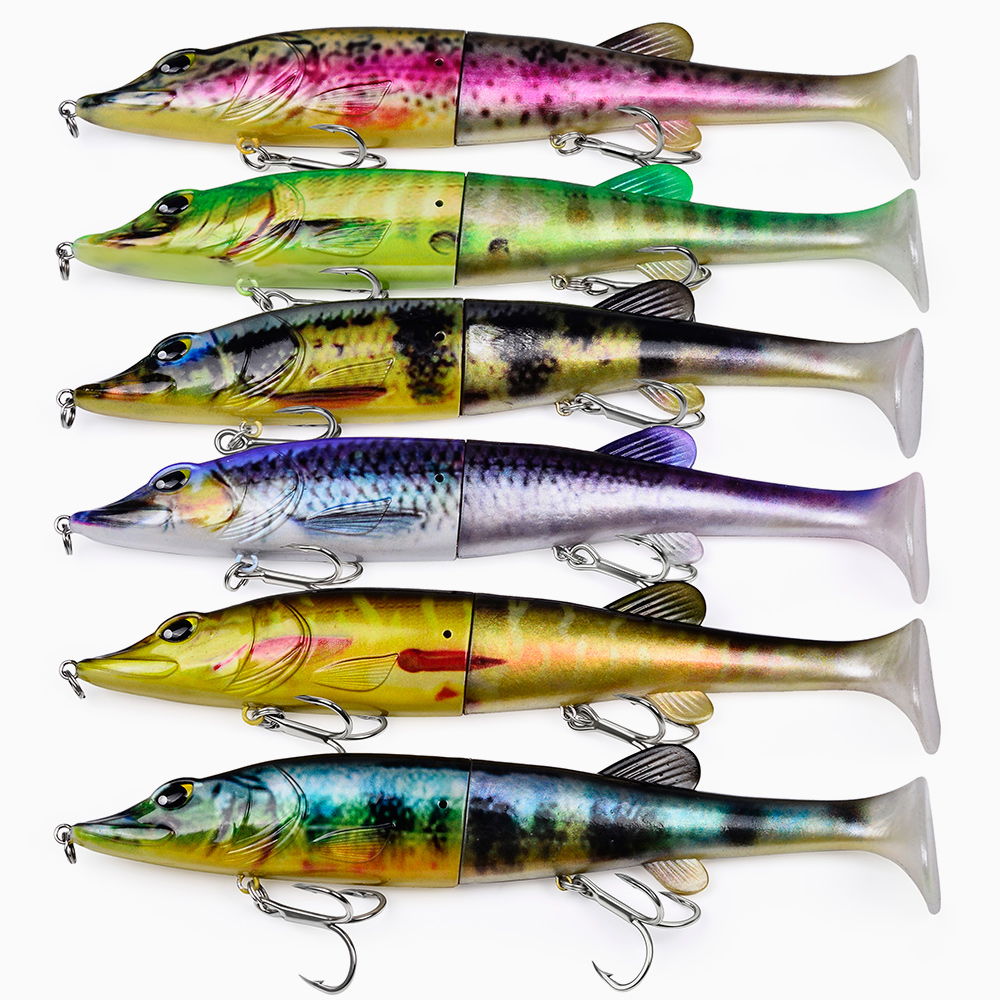
Bonding soft to hard: surface is everything
Where the soft body bonds to the head, we treat the insert surface for adhesion and inject a compatible TPE transition layer instead of forcing PVC to grip bare ABS. Bond strength is verified by pull tests at 90° peel on every production batch — the standard is simple: the soft body must tear before the joint lets go.
Batch QC that catches stress before customers do
Every batch: 4-hour room-temperature dwell, then a cold snap test (−15 °C for 2 hours, drop onto hardwood) and a swim test at working retrieve speed. A stressed part that survives molding will crack here, in our tank — not in a customer's hands. Only then does the batch get painted and packed.
Bring us your hardest hybrid
This process runs on our OEM/ODM lines daily, from 100-piece trial orders upward. Send drawings, a sample, or just the problem — talk to the factory team →


Comments (0)
No comments yet. Landed a fish on this lure? Tell us where and how.